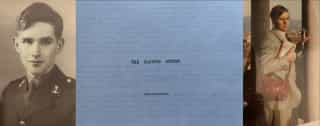
Dr. Geoff Clayton | The Origin
Afitpilot didn't start in 2019. It started in 1971, in a GP practice in Norwich, with a man who taught himself to code at evening classes.
Who He Was
Dr. Geoffrey Clayton was born on 28 August 1929. He died on 4 April 2026. He was 96.
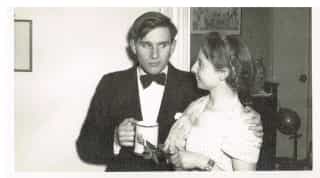
He was a GP, a pioneer, a reader, a husband, a great-grandfather. He was witty and kind and almost always laughing. He had deep admiration for those who could, as he put it, twiddle their trumpet fingers at society and do what they believed was right anyway.
He had four books on the go at any one time, including one in the loo. Books by his bedside, books tucked under his arm on the way to a charity shop in town. He never really stopped. He sent books to me well into his final years (Alan Turing, Bletchley Park, Colossus) because he believed that reading, and reading widely, and reading in different languages, was one of the few things in life that was always worth doing.
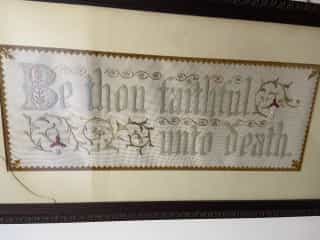
He was deeply loyal. To his wife, through the hardest years of her disability. To his convictions. To the things he believed were worth seeing through. He had a line hung on his wall about loyalty until death. He meant it.
He was also, quietly, one of the most important people in my life.
What He Built
In the 1960s, Geoffrey Clayton was a working GP who had noticed something: the way clinical data was being collected and used was deeply inefficient, and there was a better way to do it, if someone was willing to build it.
So he taught himself to code. Evening classes at Norwich City College. He then partnered with the Computing Centre at the University of East Anglia to build a data processing system for his practice from scratch: punched cards for input, magnetic tape for storage, a hand-drawn block diagram mapping the entire pipeline.
In 1971, he published a paper titled "Experience with an ICL 1905 computer in general practice." A GP, self-taught, writing about building his own data system. In 1971.
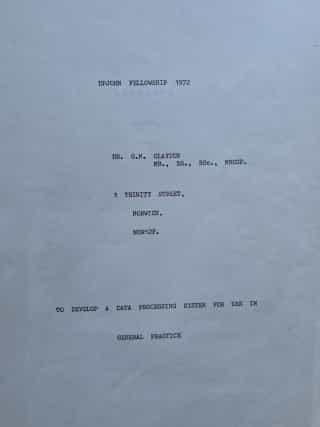
In 1972, he was awarded an Upjohn Fellowship to develop the work further.
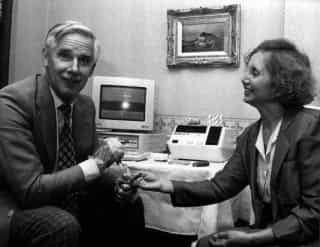
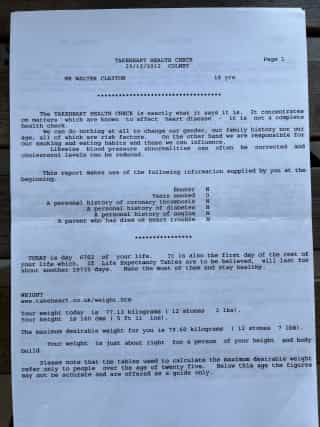
By the 1980s, he had built Takeheart, an expert system that took a set of clinical variables from a patient: cholesterol, blood pressure, lung function, stress levels, liver function. It processed them, and it generated a personalised printed report assessing that patient's risk of coronary heart disease. A system that took data about a person and turned it into something actionable and individual. Built by a GP, for his patients, because he saw a problem and decided to solve it.
In 1990, the British Computer Society awarded him the John Perry Prize for it.
By 1998, Takeheart was on the internet.
You can see an example of the Takeheart Health Check output: a printed report from when I took the test myself in 2012, aged 18.
The 1972 System
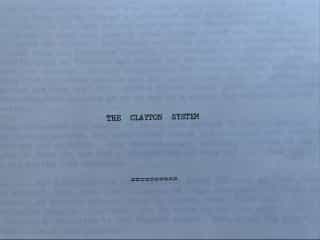
The Upjohn Fellowship paper is 64 pages long. It is typed. It has hand-drawn block diagrams. It describes, in precise technical detail, a complete data processing system for general practice, designed, built, and documented by a working GP with no formal computing background, acting as his own analyst and programmer.
The system tracked everything. Name, address, date of birth, NHS number. Blood pressure: highest, lowest, most recent. Weight, with an obesity factor calculated automatically from height, sex, and build. Haemoglobin. Peak flow rate. Cholesterol. Immunisation history. Illness incidence, coded by RCGP classification, across acute, chronic, and family categories. Cervical smear status. Cause of death. Twenty slots for dated clinical events, each carrying its own meaning defined by the practice.
Each patient record was 404 characters long, stored on magnetic tape, five records to a block. The system could hold 20,000 records per tape and scan them all in under four minutes. Data came in on punched cards from the practice office. A validation program, CVAL, checked every field before anything reached the master file. An amendment program, CMST, applied the changes. Both written in COBOL. Both his.
He wrote honestly about what building it alone had cost. The system was clumsy in places. There had been little opportunity for communication between the disciplines of GP, analyst, and programmer, because he was all three, starting from nothing. Any deviation from simplicity had produced cascading complexity that rapidly outstripped available knowledge.
By the time the paper was written, the catalogue held 8,000 records. It was not a prototype. It was running.
The Parallel
Here is the thing I keep coming back to.
Take a set of variables about a person. Run them through a system. Generate a personalised output with recommendations.
He did it for heart disease. I'm doing it for athletic performance. Sixty years apart.
Afitpilot takes training history, movement capacity, fatigue, sport demands, and recovery, and builds something specific to that athlete, not a generic programme pulled from a template. The intellectual architecture is the same as Takeheart. The belief underneath it is the same too: that a system built carefully, from real data about a real person, can improve that person's life in a way that a generic approach never will.
I didn't plan this parallel. I only understood it fully when I started building, and looked back at what he had already done. He was at the intersection of medicine and technology. I'm at the intersection of sports science and technology. He saw an inefficiency in how patient data was used, taught himself the skills to fix it, and saw it through. That is exactly what I'm doing. That is exactly the kind of life I want to see through.
It's in the Clayton genetics.
What He Gave Me
When I first told him I was teaching myself to code, he didn't look surprised. He was delighted. And then he started sending books.
In 2019, just starting to learn, I presented his work to my coding class: the punched cards, the block diagrams, Takeheart, all of it. They were so impressed that they asked me to present it to other classes too.
I never told him that.
For years I held onto that detail. I don't fully know why. Maybe I was waiting for the right moment. Maybe I thought there would be more time.
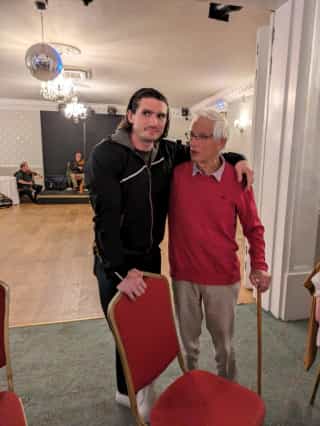
In his final moments, I was holding both his hands. And I told him. I told him that his work had reached a room full of coders, decades later, and that they had been moved by it.
There was a light tap from his fingertips. A small movement of his eyebrows.
He could hear it. He knew.
What Came Next
In the spring of 2019, six months into learning to code, I built my first real project: a Heath-Carter somatotype calculator. Take nine measurements about a person, return a three-number rating placed on a triangle. Same idea Geoff had used for cardiovascular risk, scaled down to a student's first attempt.
I kept it. It's still online, exactly as I built it then. If you want to see the moment the architecture clicked for me, it's there.
In Living Memory
He touched more people than he ever knew.
A GP who taught himself to code in the 1960s, published research in the 70s, built an expert system in the 80s, won a national prize for it in 1990, and put it on the internet before most people knew what that meant. He did it because he saw a better way, and he had the stubbornness and the curiosity to build it.
This page exists because that story deserves to be told. Because the work he did was real and remarkable and almost entirely unknown outside of the people who were lucky enough to know him. Because what he built and what I'm building are the same thing at their core, and I want that to be visible.
And because he was my grandfather, and I miss him, and this is one of the few things I can do that feels equal to what he gave me.
Dr. Geoffrey Clayton. 28 August 1929 – 4 April 2026.