Mesomorphic Endomorph (MEn)extreme
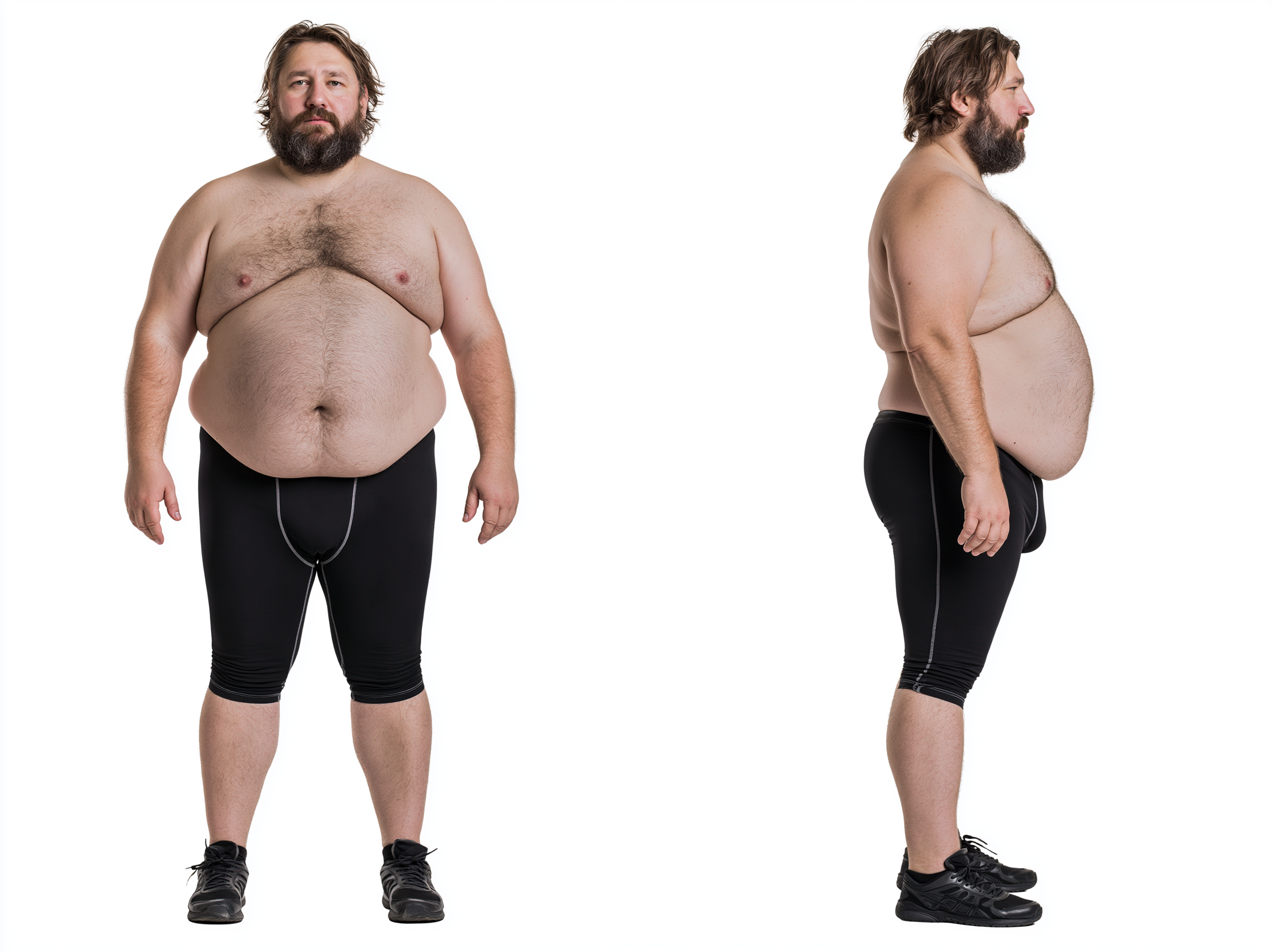
Male178 cm120 kgBody fat 33–40%
A three-number description of any human body (how fat, how muscular, how linear), first laid out by William Sheldon in the 1940s, then turned into a measurable method by Heath and Carter in 1967. This is the field guide: thirteen distinct types, a cross-comparison library of athletes and populations, and a calculator that turns nine measurements into your own three numbers.
A somatotype is three numbers in a row (for example, 3-5-2) that together describe the *shape* of a body, independent of how big or small that body is. Two people of very different heights and weights can share the same somatotype if they are built the same way. Two people of the same height and weight can have very different somatotypes if one is lean and angular and the other is round and soft.
The Heath-Carter method, which is the version everyone uses today, derives those three numbers from nine measurements: height, weight, three skinfold thicknesses, two bone breadths, and two limb girths. It takes about fifteen minutes with a tape measure, a set of calipers, and a scale. The output is a single point on a triangular chart, the somatograph, that has been used in sports science, physical anthropology, and clinical research for nearly sixty years.
This section of the site is a port of an interactive somatotype application I built in 2022. The 2022 version had accounts, saved profiles, and a dashboard; this one is deliberately stateless: read the types, browse the library, take the test, screenshot your result. No signup, nothing stored.
Every somatotype is a blend of these three. The first number is endomorphy, the second is mesomorphy, the third is ectomorphy.
Relative fatness.
How much subcutaneous fat the body carries, measured from skinfolds at the triceps, subscapular, and supraspinale sites. High endomorphy gives a softer, rounder silhouette.
Relative musculoskeletal robustness.
How thick the skeleton and how developed the musculature, measured from bone breadths (humerus, femur) and limb girths (biceps, calf) corrected for fat. High mesomorphy gives the dense, square, athletic build.
Relative linearity.
How long and thin the body is for its weight, measured from the height-weight ratio. High ectomorphy gives the long, narrow, lightly-built silhouette of distance runners and high jumpers.
Somatotype usually gets discussed as a label: endomorph, mesomorph, ectomorph. Treated that way it invites a question it can't really answer: can you change yours? The more useful framing is that the Heath-Carter equations describe a constrained system. Some inputs are fixed in adulthood and some are not, so the question stops being "can it change" and becomes "in which direction, by how much, and how fast."
Height and the two bone breadths (the widths of the humerus and femur) don't move in an adult. They carry the largest coefficients in the mesomorphy equation and dominate the height-weight ratio behind ectomorphy, so they pin a person to one region of the chart before any training. A short, broad-framed person can't reach the extreme-ectomorph corner; a tall, narrow-framed person can't reach the extreme-mesomorph corner. The fixed terms don't permit it.
The malleable inputs don't move equally. The three skinfolds are the fast, wide axis: fat shifts endomorphy two to four units within a single diet-and-training cycle. Limb girths move mesomorphy slowly and barely at all once someone is trained: one to two units over a multi-year career. Ectomorphy is the dependent axis, tracking weight inversely. So an individual's reachable region is a diagonal band: wide and fast on the fat axis, narrow and slow on the muscle axis, fixed on height and frame.
Move the fixed anchors and the reachable cluster relocates. Move fat and muscle and the point travels within it. Push a component past the triangle's edge and the result is flagged off the standard chart, in the extreme category.
The thirteen standard categories are defined by which component dominates and how close the other two are, not by their absolute size. That has a blind spot at the extremes: a balanced 4-4-3 and a competitive strongman can fall under the same dominance label even though one sits comfortably inside the chart and the other is well outside it.
The somatochart makes the boundary concrete. Push a component past the apex and the plotted point leaves the triangle, so there's a clear case for an "extreme" qualifier on top of the relationship category. Eddie Hall near 190 kg at 188 cm, or Hafþór Björnsson around 205 kg at 205 cm, plot as extreme endomorphic mesomorphs above the mesomorphy apex, outside the triangle. Tall athletes go the other way: height enters mesomorphy negatively and dominates the height-weight ratio, so stature alone pushes a physique toward the ectomorphy corner regardless of how much muscle is carried.
Different people don't merely occupy different spots within one shared region. Their fixed inputs place the region itself in different parts of the chart, and at the extremes those inputs push it clean off the standard triangle. The honest way to handle the people beyond the general population the categories were built for is to mark them as beyond it, rather than file them under the nearest ordinary label.
Read the types, cross-reference athletes and populations, or calculate your own.
A directory of the thirteen distinct somatotype profiles, grouped into five categories: mesomorph, ectomorph, endomorph, hybrid, central. Each type gets its own page with portraits, a triangle graph, and a description.
Browse the types 02Tribes, sports, and occupations plotted against the three somatotype components. Filter and sort to see who shares your build, from rugby forwards to marathon runners to traditional populations studied in the original anthropometric literature.
Open the library 03Enter the nine Heath-Carter measurements and see your own three numbers, your matched type, and where you land on the triangle. Stateless: nothing is saved. Screenshot the result if you want to keep it.
Take the test 04The 2022 MERN-stack web application this section was ported from, and the 2019 single-page calculator that preceded it. Preserved as a screenshot gallery and a still-running prototype.
See the heritageThis section is the third iteration. The first, in 2019, was a single HTML page with nine inputs and a canvas drawing the somatograph, built in the first weeks I was learning to code. The second, in 2022, was a full MERN-stack web application with accounts, dashboards, and a five-person contributor team. This one, in 2026, ports the four most useful pieces of that 2022 build into the AfitPilot marketing site as native Vue, stateless, bilingual, and meant to be read as much as used.
If you want the story of how each version came to be, both heritage pages are preserved below.