Balanced Mesomorph
Código:BM
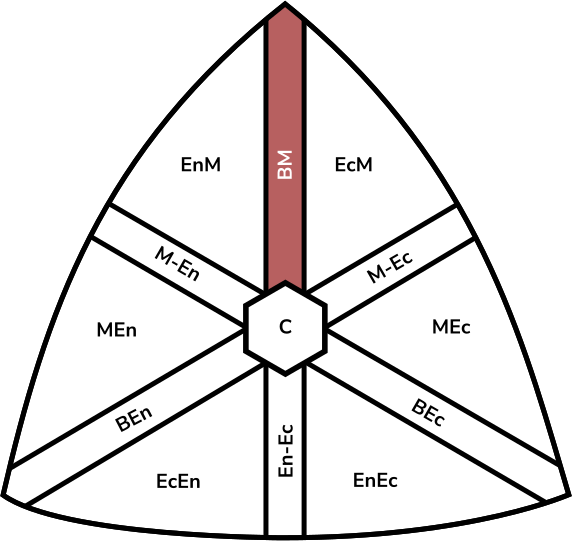
Mesomorfia dominante; endomorfia y ectomorfia aproximadamente iguales y ambas menores. El atleta clásico.
Descripción
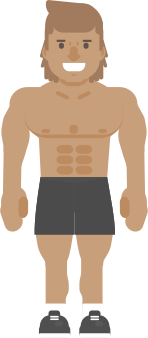
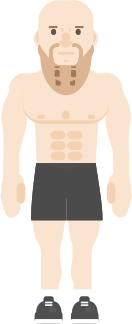
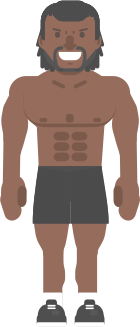
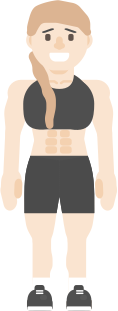
El mesomorfo equilibrado es lo que la mayoría imagina al escuchar la palabra atleta: hombros cuadrados, extremidades gruesas, baja grasa corporal, sin linealidad extrema. La endomorfia y la ectomorfia están aproximadamente iguales y ambas por debajo de la mesomorfia.
Este es el tipo que se repite en la gama más amplia de deportes de alto rendimiento: fútbol, gimnasia, remo, decatlón, artes marciales mixtas. Tolera bien el volumen de entrenamiento, se recupera rápido y da la apariencia de estar diseñado para el trabajo atlético.
La tribu Manu, estudiada en la antropología física temprana como una de las poblaciones más uniformemente mesomórficas jamás registradas, cae en este tipo, al igual que la mayoría de los culturistas masculinos en competición (donde la endomorfia baja pero la mesomorfia se mantiene muy alta).
El término 'equilibrado' en el nombre se refiere a la relación entre los otros dos componentes, no al equilibrio general del cuerpo. Un mesomorfo equilibrado no está en el centro del triángulo; se sitúa cerca de la esquina de mesomorfia con una base pequeña.
Compartes este tipo con
Poblaciones, deportes y profesiones registrados en la literatura antropométrica con un somatotipo cercano a este.
 TribuManuHombre
 TribuManuMujer
 DeporteFootballHombre
- DeporteBodybuilderHombre
- DeporteBodybuilderMujer
 DeporteRowerMujer
- DeporteCrossfitMujer
- AthleteGymnasticsHombre
- AthleteKarateHombre
- AthleteSurfHombre
- AthleteSoccerHombre
- AthleteSoccerHombre
- AthleteSoccerHombre
- AthleteSoccerHombre
- AthleteJudoHombre
- AthleteSprint paddlingHombre
- AthleteWater poloHombre
- AthleteGreco-roman wrestlingHombre
- AthleteVolleyballMujer
- AthleteLatin danceHombre
- AthleteBoxingHombre
- AthleteBoxingHombre
- AthleteJiu-JitsuHombre
- AthleteSoccerHombre
- AthleteSoccerHombre
- AthleteSoccerHombre
- AthleteJudoHombre
- AthleteJudoHombre
- AthleteJudoHombre
- AthleteJudoHombre
- AthleteSprintHombre
- AthleteSoccerHombre
- AthleteJudoHombre
- AthleteJudoHombre
- AthleteJudoMujer
- AthleteTaekwondoHombre
- AthleteSoccerHombre
- AthleteSoccerHombre
- AthleteTraditional rowingHombre
- AthleteTraditional rowingHombre
- AthleteBasketballHombre
- AthleteBreakdancingHombre
- AthleteBreakdancingMujer
- AthleteSport climbingHombre
- AthleteSoccerMujer
- AthleteTriathlonMujer
- AthleteAthletics (track & field)Mujer
- AthleteBasketballHombre
- AthleteBasketballHombre
- AthleteBeach volleyballHombre
- AthleteBoxingHombre
- AthleteGreco-roman wrestlingHombre
- AthleteGymnasticsHombre
- AthleteAthletics (running)Hombre
- AthleteHandballHombre
- AthleteKarateHombre
- AthleteKickboxingHombre
- AthleteAthletics (jumps)Hombre
- AthleteRugbyHombre
- AthleteSoccerHombre
- AthleteSoccerHombre
- AthleteSoccerHombre
- AthleteSprintHombre
- AthleteTaekwondoHombre
- AthleteTaekwondoHombre
- AthleteAthletics (running)Hombre
- AthleteAthletics (running)Hombre
- AthleteVolleyballHombre
- AthleteVolleyballHombre
- AthleteWeightliftingHombre
- AthleteAmerican footballMujer
- AthleteAthletics (running)Mujer
- AthleteAthletics (running)Mujer
- AthleteOrienteeringHombre
- AthleteSoccerHombre
- AthleteSoccerHombre
- AthleteVolleyballHombre
- AthleteTriathlonHombre
- AthleteSoccerHombre
- AthleteAthletics (running)Mujer
- AthleteTennisHombre
- AthleteSoccerHombre
Calcula el tuyo
Introduce las nueve medidas de Heath-Carter y obtén tus tres números, tu tipo correspondiente y tu posición en el triángulo.