Mesomorph-Ectomorph
Código:M-Ec
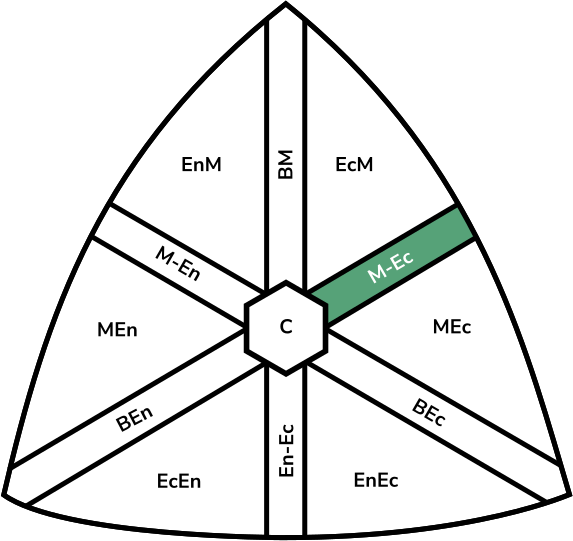
Mesomorfia y ectomorfia iguales; endomorfia menor. Magro y atlético con proporciones lineales.
Descripción
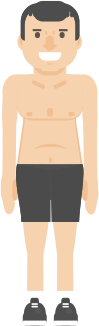
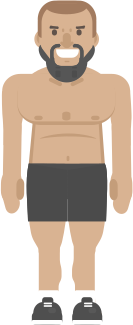
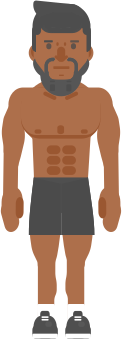
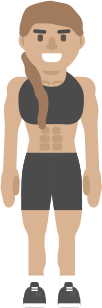
El mesomorfo-ectomorfo se sitúa en el borde entre dos esquinas del triángulo. La mesomorfia y la ectomorfia están aproximadamente empatadas; la endomorfia es claramente menor. El resultado es un cuerpo alto, magro y bien formado con musculatura visible pero extremidades largas.
Los jugadores de baloncesto (hombres y mujeres) frecuentemente caen aquí, al igual que la mayoría de los nadadores masculinos de más de seis pies, los corredores de vallas de distancia y los decatletas. El cuerpo tiene suficiente masa para generar potencia y suficiente longitud para cubrir terreno.
Donde el mesomorfo ectomórfico aún se lee como 'atleta grueso con extremidades largas', el mesomorfo-ectomorfo se lee más como 'atleta magro con hombros atléticos'. La distinción es un punto de calificación en el triángulo pero una clara diferencia visual.
Los tipos híbridos como este son útiles en el entrenamiento porque señalan a un atleta que puede cambiar plausiblemente hacia cualquiera de las esquinas vecinas con unos años de entrenamiento enfocado, según lo que la disciplina recompense.
Compartes este tipo con
Poblaciones, deportes y profesiones registrados en la literatura antropométrica con un somatotipo cercano a este.
 DeporteSwimmerMujer
- DeporteBasketballHombre
- AthleteRowingMujer
- AthleteRowingMujer
- AthleteVolleyballHombre
- AthleteTaekwondoHombre
- AthleteStandard danceHombre
- AthleteBoxingHombre
- AthleteRacewalkingHombre
- AthleteJudoHombre
- AthleteJudoHombre
- AthleteTaekwondoHombre
- AthleteMiddle-distance runningHombre
- AthleteAthletics (running)Hombre
- AthleteSprintHombre
- AthleteAthletics (running)Hombre
- AthleteAthletics (running)Hombre
- AthleteVolleyballHombre
- AthleteAthletics (running)Hombre
- AthleteSoccerHombre
- AthleteVolleyballHombre
- AthleteBasketballHombre
- AthleteAthletics (running)Mujer
- AthleteAthletics (running)Mujer
- AthleteSoccerHombre
Calcula el tuyo
Introduce las nueve medidas de Heath-Carter y obtén tus tres números, tu tipo correspondiente y tu posición en el triángulo.