Balanced Mesomorph
Code:BM
Mésomorphie dominante ; endomorphie et ectomorphie à peu près égales et toutes deux plus faibles. L'athlète classique.
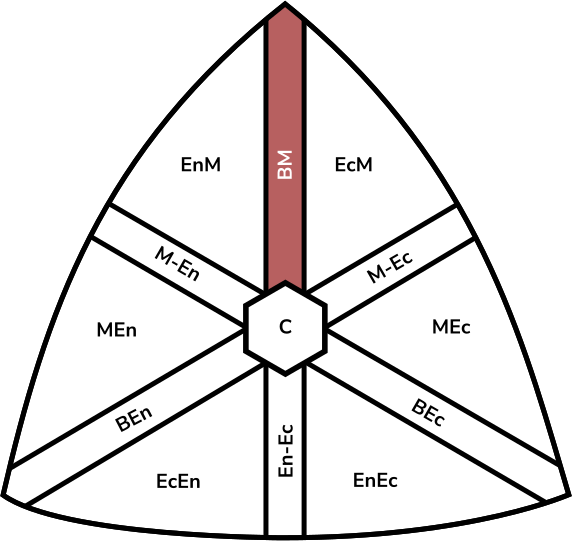
Description
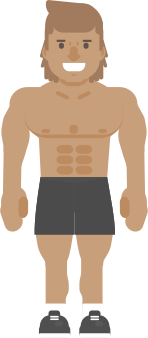
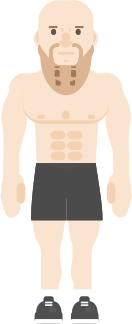
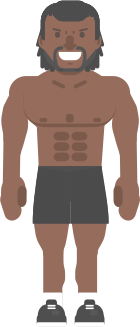
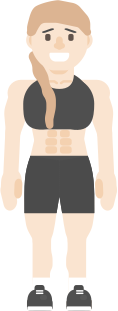
Le mésomorphe équilibré correspond à ce que la plupart des gens imaginent en entendant le mot athlète : épaules carrées, membres épais, taux de gras bas, aucune linéarité extrême. L'endomorphie et l'ectomorphie sont à peu près égales et toutes deux inférieures à la mésomorphie.
C'est le type qui revient dans le plus large éventail de sports de haut niveau : football, gymnastique, aviron, décathlon, arts martiaux mixtes. Il tolère bien le volume d'entraînement, récupère vite, et donne l'impression d'avoir été conçu pour le travail athlétique.
La tribu Manu, étudiée en anthropologie physique comme l'une des populations les plus uniformément mésomorphes jamais enregistrées, relève de ce type, tout comme la plupart des bodybuilders masculins au niveau de sécheresse de compétition (où l'endomorphie chute mais où la mésomorphie reste très élevée).
Le mot « équilibré » renvoie à la relation entre les deux autres composantes, non à un équilibre global du corps. Un mésomorphe équilibré n'est pas au milieu du triangle ; il se situe près du coin mésomorphe, avec une base réduite.
À comparer avec
Populations, sports et professions enregistrés dans la littérature anthropométrique avec un somatotype proche de celui-ci.
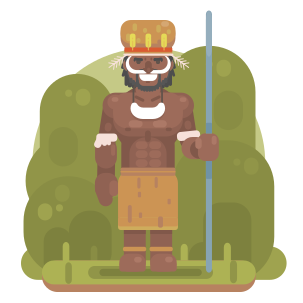 TribuManuHomme
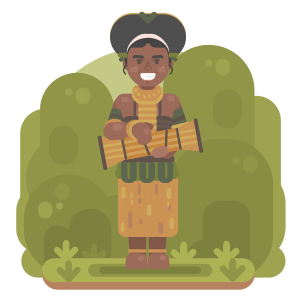 TribuManuFemme
 SportFootballHomme
- SportBodybuilderHomme
- SportBodybuilderFemme
 SportRowerFemme
- SportCrossfitFemme
- AthleteGymnasticsHomme
- AthleteKarateHomme
- AthleteSurfHomme
- AthleteSoccerHomme
- AthleteSoccerHomme
- AthleteSoccerHomme
- AthleteSoccerHomme
- AthleteJudoHomme
- AthleteSprint paddlingHomme
- AthleteWater poloHomme
- AthleteGreco-roman wrestlingHomme
- AthleteVolleyballFemme
- AthleteLatin danceHomme
- AthleteBoxingHomme
- AthleteBoxingHomme
- AthleteJiu-JitsuHomme
- AthleteSoccerHomme
- AthleteSoccerHomme
- AthleteSoccerHomme
- AthleteJudoHomme
- AthleteJudoHomme
- AthleteJudoHomme
- AthleteJudoHomme
- AthleteSprintHomme
- AthleteSoccerHomme
- AthleteJudoHomme
- AthleteJudoHomme
- AthleteJudoFemme
- AthleteTaekwondoHomme
- AthleteSoccerHomme
- AthleteSoccerHomme
- AthleteTraditional rowingHomme
- AthleteTraditional rowingHomme
- AthleteBasketballHomme
- AthleteBreakdancingHomme
- AthleteBreakdancingFemme
- AthleteSport climbingHomme
- AthleteSoccerFemme
- AthleteTriathlonFemme
- AthleteAthletics (track & field)Femme
- AthleteBasketballHomme
- AthleteBasketballHomme
- AthleteBeach volleyballHomme
- AthleteBoxingHomme
- AthleteGreco-roman wrestlingHomme
- AthleteGymnasticsHomme
- AthleteAthletics (running)Homme
- AthleteHandballHomme
- AthleteKarateHomme
- AthleteKickboxingHomme
- AthleteAthletics (jumps)Homme
- AthleteRugbyHomme
- AthleteSoccerHomme
- AthleteSoccerHomme
- AthleteSoccerHomme
- AthleteSprintHomme
- AthleteTaekwondoHomme
- AthleteTaekwondoHomme
- AthleteAthletics (running)Homme
- AthleteAthletics (running)Homme
- AthleteVolleyballHomme
- AthleteVolleyballHomme
- AthleteWeightliftingHomme
- AthleteAmerican footballFemme
- AthleteAthletics (running)Femme
- AthleteAthletics (running)Femme
- AthleteOrienteeringHomme
- AthleteSoccerHomme
- AthleteSoccerHomme
- AthleteVolleyballHomme
- AthleteTriathlonHomme
- AthleteSoccerHomme
- AthleteAthletics (running)Femme
- AthleteTennisHomme
- AthleteSoccerHomme
Calculer le vôtre
Entrez les neuf mesures de Heath-Carter et obtenez vos trois chiffres, votre type associé, et votre position sur le triangle.